
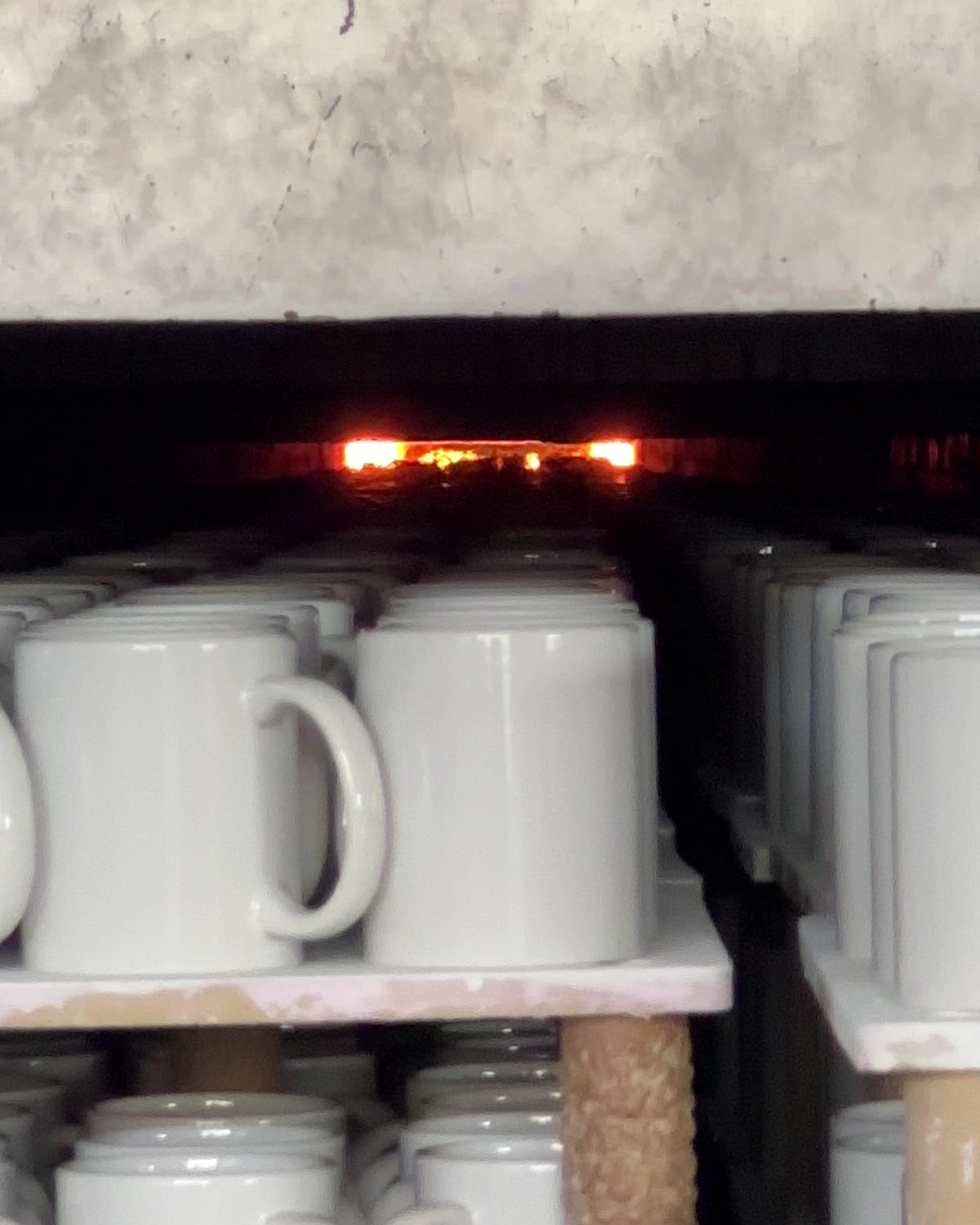
Any mug that holds a drink is a food-contact product, and the first safety question importers ask is about lead and cadmium. This guide explains where these metals can come from in ceramics, how they are tested, what the European limits are, and how we keep them out of our products at HongDa Ceramics.
Where lead and cadmium can come from
The clay body is not the usual source. The risk lies in what goes on top of it: some glaze ingredients and some decoration pigments, especially bright reds, oranges and yellows, have traditionally contained lead or cadmium. If a glaze or decal contains them and is not properly formulated and fired, acidic drinks such as coffee, juice or wine can draw small amounts out of the surface.
How the test works
The standard European method measures what actually migrates out of the mug, not what is in the material. The mug is filled with a 4% acetic acid solution and left for 24 hours at room temperature. The liquid is then analysed, and the amount of lead and cadmium found in it is compared with the legal limit.
The EU limits
In the European Union, ceramics in contact with food fall under Regulation (EC) No 1935/2004 and Council Directive 84/500/EEC. The directive sets limits by type of article:
| Category | Article | Lead limit | Cadmium limit |
|---|---|---|---|
| 1 | Flat items and items that can be filled to a depth of 25 mm or less (plates, saucers) | 0.8 mg/dm² | 0.07 mg/dm² |
| 2 | All other items that can be filled (mugs, cups, bowls) | 4.0 mg/L | 0.3 mg/L |
| 3 | Cooking ware; packaging and storage vessels over 3 litres | 1.5 mg/L | 0.1 mg/L |
Mugs are Category 2.
Our results
In May 2025, white and black stoneware mugs made in our factory were tested by SGS to Regulation (EC) No 1935/2004 and Directive 84/500/EEC. Both passed:
| Result | EU limit (Category 2) | |
|---|---|---|
| Leachable lead | below 0.1 mg/L | 4.0 mg/L |
| Leachable cadmium | below 0.01 mg/L | 0.3 mg/L |
“Below 0.1” and “below 0.01” mean the amounts were under the laboratory’s reporting limit: in practice, not detected.
How we keep lead and cadmium out
A good test result is the outcome of controls earlier in the process:
- Raw materials are analysed before they enter the factory. We check the composition of incoming materials so that lead and cadmium are excluded at the source.
- We formulate our own glazes. Our glazes and colour glazes are made in-house, without raw materials that contain lead or cadmium.
- Decals use lead- and cadmium-free pigments. The same rule applies to decoration as to glaze.
Testing for your market
Different markets have different food-contact rules, and many buyers have their own test protocol. We work in two ways:
- You test. We send samples and you have them tested by the laboratory you choose.
- We arrange the test. You tell us the standard and the laboratory; we submit the samples and provide the report.
Testing can be done for each order when you require it. Because each market asks for different tests, the testing cost is paid by the buyer. Please tell us the destination market and the standard you need before production, so the right test is planned from the start.
Quick answers
Are ceramic mugs from China safe from lead and cadmium?
It depends on the factory. A mug is safe when its glaze and decoration are properly formulated and fired, and this can be verified by a migration test from an independent laboratory. Ask your supplier for results.
What is the EU limit for lead in a ceramic mug?
4.0 mg/L of leachable lead and 0.3 mg/L of leachable cadmium for fillable articles such as mugs, under Directive 84/500/EEC.
Who pays for the test?
The buyer. The tests required differ from market to market, so testing is arranged and charged according to what each buyer needs.
Can I get a test report for my own order?
Yes. We can supply samples for your own testing or arrange a test to the standard you specify and send you the report.
Related guides
- How to choose a ceramic mug factory in China
- Reactive glaze mugs explained
- Mug decoration methods compared
Need a specific test for your market?
Tell us where the mugs will be sold and which standard your customer requires. We will supply samples for your own testing, or arrange the test and send you the report.